
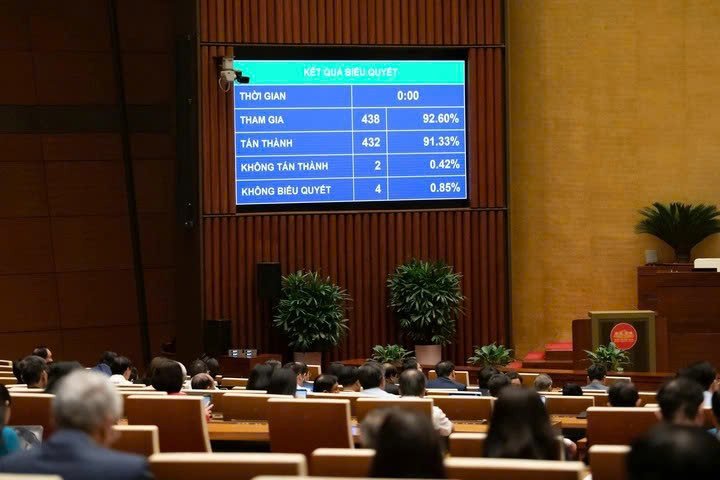
On December 10, 2025, Vietnam’s National Assembly passed Law No. 131/2025/QH15, amending and supplementing provisions of the Intellectual Property Law. The law entered into force on April 1, 2026. It marks an important step in improving the legal framework and facilitating the registration and protection of intellectual property rights in Vietnam.
Applicants should note the following key changes introduced by the 2025 amendments to the Intellectual Property Law:
1. Patents
- Security control applies to inventions on the list of state secrets in technical fields affecting national defense and security, created in Vietnam and subject to registration rights held by Vietnamese citizens residing in Vietnam or by organizations established under Vietnamese law. Applications for such inventions may be filed abroad only after permission has been granted by the Ministry of National Defense or the Ministry of Public Security (Article 89a(1)).
- The provisions concerning inventions whose inventors are not human beings have been revised and clarified. Accordingly, an application may be considered invalid, refused protection, or a granted patent may be invalidated if there are grounds to establish that the inventor is not a human being (Article 96(1)(d), Article 109(2)(c1), and Article 117(1)(e)).
- The time limits for procedures to establish patent rights have been significantly shortened.
2. Trademarks
- Applicants seeking certification or collective mark registrations involving signs indicating national geographical origin should note that, from April 1, 2026, signs indicating Vietnam as the national geographical origin of goods or services are considered non-distinctive, unless they were widely used and recognized as trademarks before the filing date, or form part of a distinctive sign registered as a collective or certification mark (Article 74(2)(dd1)).
- Time limits for procedures to establish trademark rights have been significantly shortened. The new time limits apply to trademark applications published on or after April 1, 2026.
- In particular, applicants may request expedited substantive examination of trademark applications, to be completed within three months from publication, in the circumstances specified in Article 14a(2) of Decree No. 65/2023/ND-CP, as amended by Decree No. 100/2026/ND-CP.
3. Industrial Designs
- The industrial design protection regime has undergone major changes. In particular, the scope of protectable subject matter has expanded to include designs of inseparable parts of products (partial designs) and designs of non-physical products (Article 4(13)).
- Under Law No. 131/2025/QH15, applicants benefit from additional exceptions to the novelty requirement for industrial design protection.
- The provisions concerning industrial designs whose creators are not human beings have been revised and clarified. Accordingly, an application may be considered invalid, refused protection, or a granted industrial design patent may be invalidated if there are grounds to establish that the creator is not a human being (Article 96(1)(d), Article 109(2)(c1), and Article 117(1)(e)).
- Time limits for procedures to establish industrial design rights have been shortened and apply to applications published on or after April 1, 2026.
The period for publishing an industrial design application has also been shortened to one month from the date the application is deemed valid (Article 110(3)).
4. Geographical Indications
Time limits for procedures to establish rights to geographical indications have been shortened as follows:
- Substantive examination must be completed within five months from publication (Article 119(2)(b)). This time limit applies to geographical indication applications published on or after April 1, 2026.
- Applications must be published within one month from the date they are deemed valid (Article 110(3)).
5. Representation in Industrial Property and Appeal Procedures
For industrial property and appeal procedures carried out from April 1, 2026 through lawful representatives under Articles 89 and 119a of the Intellectual Property Law, applicants should note the following requirements for powers of attorney:
- If a power of attorney does not specify its duration, the duration is determined in accordance with the Civil Code.
- If either the principal or the representative unilaterally terminates the authorization, a written declaration of termination is required.
Further guidance on authorization in industrial property procedures is provided in Article 8 of Circular No. 10/2026/TT-BKHCN.
6. Formality Examination Results
From April 1, 2026, after formality examination, the Intellectual Property Office of Viet Nam issues refusal decisions for invalid applications. Applications deemed valid proceed to publication without a notice of acceptance of a valid application. The Office publishes a list of applications proceeding to publication on its official portal, specifying the publication date for each application.
Source: Intellectual Property Office of Viet Nam.